A spa abroad may look familiar at first glance: a reception desk, towels, changing rooms, perhaps a treatment menu. Yet it is common to find yourself handed unfamiliar clothing and directed to a gender-segregated bathing area, quickly realizing that 'spa' can mean something much broader than the hotel version you might know.
It is usually wise to treat each new spa as its own local system, with its own way of doing things. Before booking, it helps to find out how the establishment handles changing, nudity, bathing, therapist assignment, payment, tipping, treatment boundaries, and shared facilities. The spa’s official website is often a good starting point, and staff or a hotel concierge can answer questions if something is unclear. A little preparation tends to make the experience more comfortable for everyone.
First, find out what “spa” means at that address.
In one country, a spa may mean private treatment rooms and a massage menu. In another, the main experience may be communal bathing, steam rooms, saunas, exfoliation, thermal pools, or a sequence that includes several of those things.
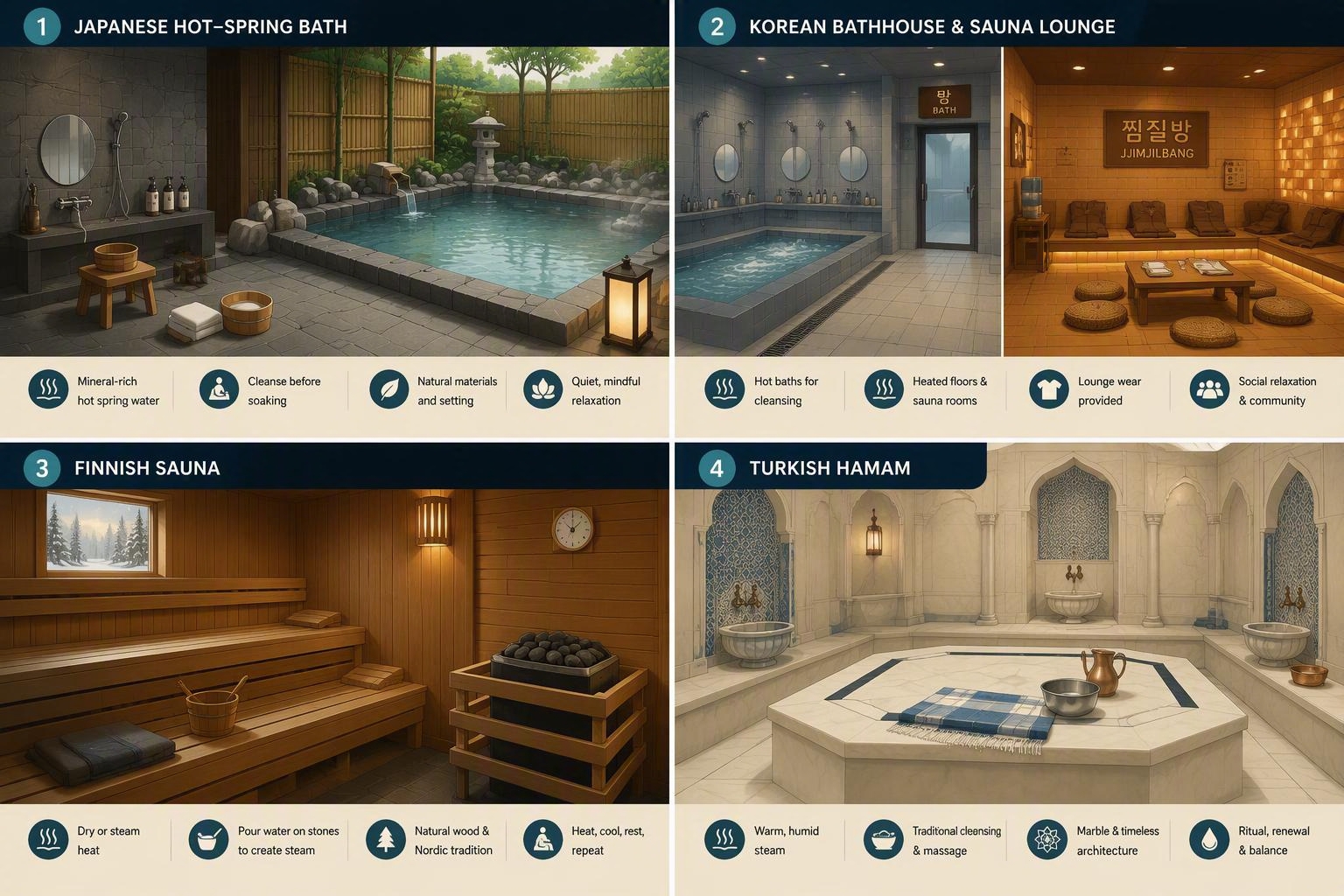
A Japanese onsen is primarily a hot-spring bathing experience, not a massage appointment. A Korean jjimjilbang combines gender-segregated bathing, including communal clothed sauna and relaxation areas. A Finnish sauna may center on heat, steam, cooling, and social quiet. A Turkish hamam traditionally moves through heated marble spaces, washing, exfoliation, and foam treatment. Don't judge any of these by the expectations of a conventional Western day spa.
Read the establishment’s own instructions before arrival. The more traditional the facility, the more important the sequence may be.
Changing rules vary more than travelers expect
Do not assume swimwear is always required—or always prohibited.
Japan’s official tourism guidance notes that most onsen bathing is done nude, with swimsuits left in the changing area. Towels and hair stay out of the shared bathwater. Finland is more flexible: Visit Finland notes that Finns commonly sauna nude, but towels or swimsuits are also acceptable in many contexts. In contrast, particular mixed public saunas may specifically require swimwear.
Korean jjimjilbangs commonly separate the bathing area by gender; visitors then change into provided T-shirts and shorts for the mixed communal sauna areas. Turkish hamams commonly provide a peştemal, a thin cotton wrap, and some facilities also provide disposable underwear depending on the package.
A practical rule is to follow the facility's advice rather than relying on internet stereotypes.
Wash before entering shared water.
Communal bathing cultures are especially strict about the distinction between washing your body and soaking your body. In Japan, JNTO advises washing thoroughly at the shower station before entering the bath, keeping towels and hair out of the water, and avoiding swimming or splashing.
Korean facilities similarly route guests through changing and bathing before the clothed jjimjilbang area. Hamam practice involves repeated rinsing and washing as part of the experience itself.
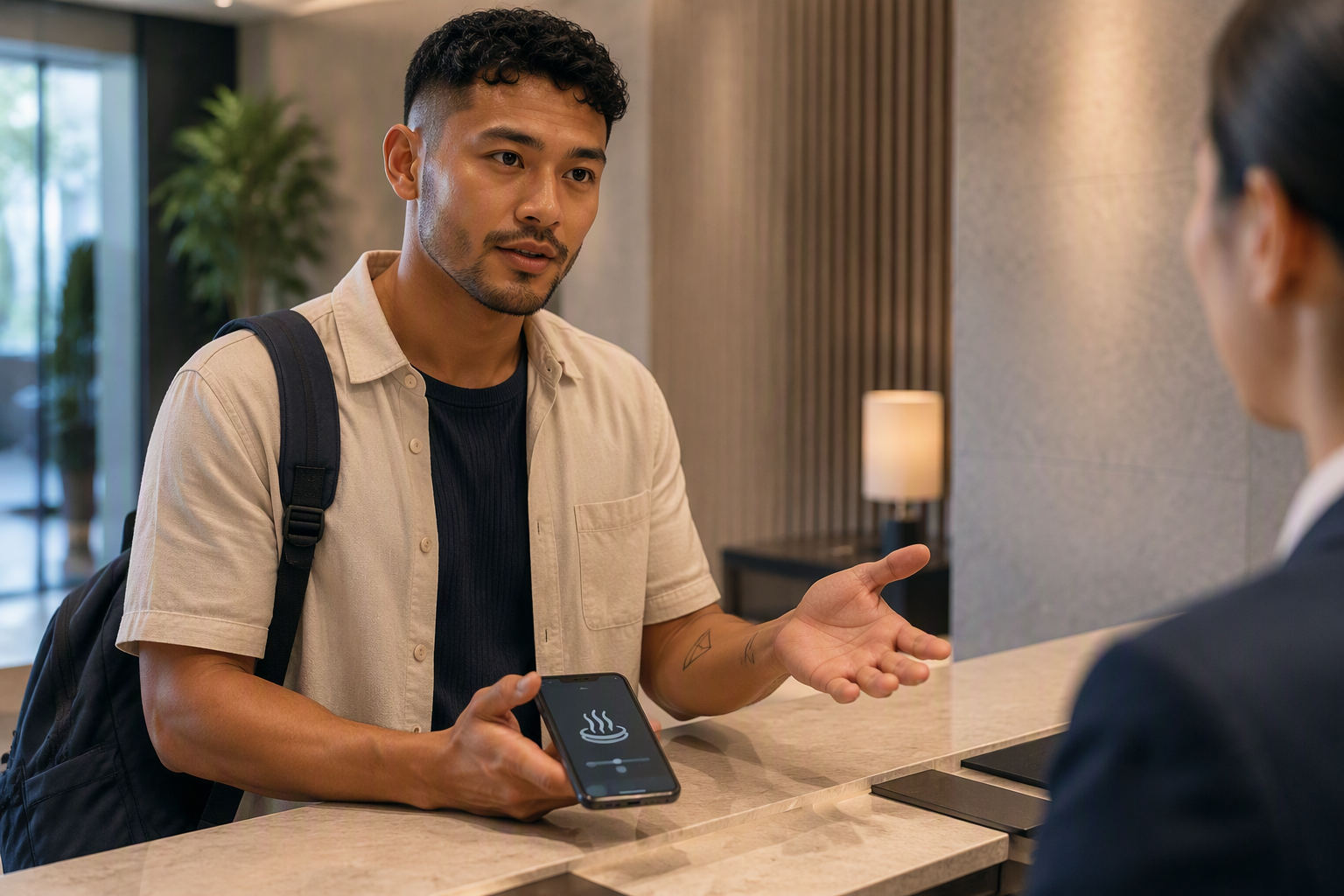
If you are unsure, it often helps to observe the sequence others follow or to ask staff for guidance. Where language is a barrier, a translation app, a few prepared phrases, or a written question can be useful. Unless the facility specifically says otherwise, it is best to leave soap, shampoo, and towels away from shared soaking pools.
Tattoos can change access in Japan.
Travelers with tattoos should check Japanese onsen and sento policies before arriving. JNTO notes that restrictions remain common, although more facilities are becoming tattoo-friendly and policies vary. Some places allow small tattoos to be covered; others do not. Private baths may provide an alternative.
Foreign visitors are not automatically exempt from local policies. Asking in advance is considerate and helps avoid putting staff in a difficult position at the last moment.
Heat tolerance is not a competition.
Thermal facilities can involve temperatures far above an ordinary shower or treatment room. JNTO advises acclimatizing to hot onsen water and taking breaks. Visit Finland describes Finnish sauna temperatures commonly around 70–90°C, while Korean jjimjilbangs may have multiple rooms at different temperatures; Korea Tourism Organization guidance for beginners recommends starting with cooler rooms and increasing gradually.
If you begin to feel dizzy, faint, nauseated, confused, or unwell, it is sensible to leave the hot environment and hydrate. There is no need to mirror the longest-staying local; cultural authenticity is not gauged by endurance.
If you have a medical condition that affects heat tolerance, blood pressure, pregnancy, circulation, or fainting risk, check whether the thermal experience is appropriate for you before going. Travelers with mobility or accessibility needs should also check in advance about the facility's accessibility features, such as ramps, elevators, accessible changing areas, and the availability of help if required. Not all spas and bathhouses are fully accessible, so it is best to validate details before your visit.
Massage and body treatments may be separate purchases.
Admission to a bathhouse does not necessarily include hands-on treatment. A Korean jjimjilbang may charge separately for massage chairs, body scrubs, or other services. A Turkish hamam may offer self-service entry, scrub-and-foam packages, massage, and beauty treatments at different prices. A resort spa may bundle thermal access with a booked treatment—or may not.
Confirm what is included before changing. You might ask whether gratuity or service charge is included, whether lockers require deposits, whether sandals and towels are supplied, and how extra services are billed.
Photography may be inappropriate even if your phone is waterproof.
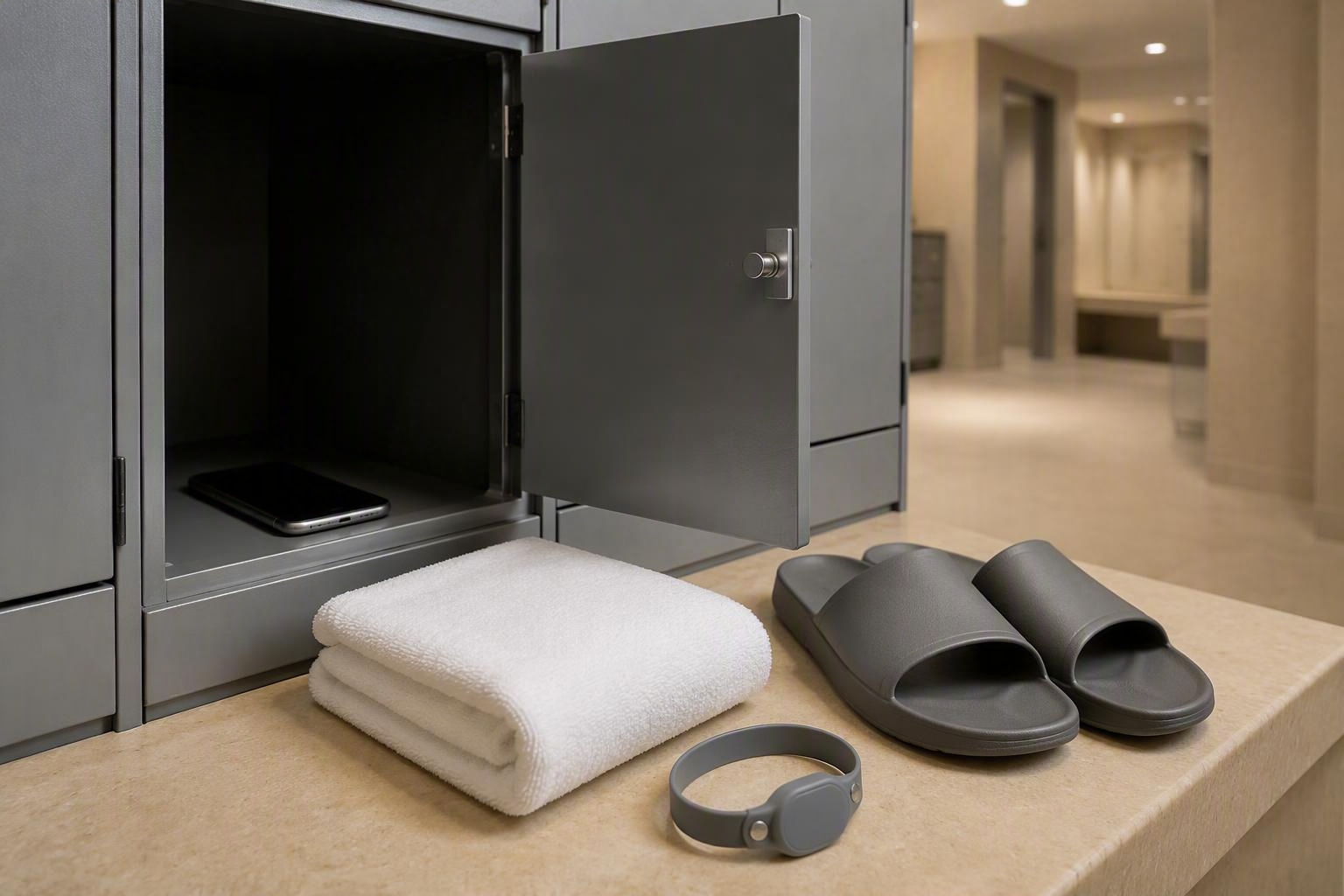
Changing rooms, bathing areas, saunas, and communal relaxation spaces are often places where other guests reasonably expect privacy. JNTO explicitly advises leaving phones outside onsen bathing areas. Even where no sign is visible, avoid photography around undressed guests unless the establishment clearly permits it.
If you would like a photo of the architecture, it is best to take it before entering the wet area, rather than while others are using the showers.
Therapist gender requests are worth making before arrival.
Some travelers are comfortable with any qualified practitioner, while others have a preference. Local staffing patterns and gender norms can vary. If therapist gender is important to you for religious, cultural, trauma, modesty, or personal reasons, it is best to mention this when booking, rather than assuming the spa will automatically match your preference.
Solo travelers are common in many spas, but experiences may differ. Some facilities are designed with solo relaxation in mind, while others may cater more to groups or couples. If you are visiting alone, check whether treatments such as massages or bathing areas are set up for individual use, and consider mentioning you are a solo guest when booking. Staff are usually helpful and can guide you through any special considerations or privacy options for solo visitors.
The same applies to couple rooms, shared treatment rooms, doors versus curtains, and whether a companion may stay nearby.
Do not assume tipping etiquette.
Tipping is an area where it is easy to bring the wrong habit from home. In some destinations, gratuity is common; in others, service charges are included in the bill, or tipping may not be expected and could even feel awkward.
Check the establishment’s policy, hotel concierge guidance, or current destination-specific travel information. Avoid treating one country’s tipping percentage as a universal massage rule.
Bring less than you think.
In communal facilities, valuables tend to be more of a burden than a benefit. It is usually enough to bring your payment method, ID if needed, any necessary medication, and the clothing or swimwear specified by the facility. Lockers are there for a reason. Expensive jewelry is best left at home, especially for mineral baths where metals may discolor.
A small waterproof or washable bag can be useful for toiletries if the facility expects guests to bring their own.
Ask before assuming that “local tradition” means fixed tradition.
Bath and spa culture changes. JNTO notes evolving tattoo policies. Finnish public saunas differ on swimwear. Korean facilities range from neighborhood bathhouses to large leisure complexes. Turkish hamams offer everything from self-service bathing to tourist-oriented packages.
Few establishments follow a single national rule identically.
A respectful traveler learns the local pattern, then checks the specific house rules. This approach is more reliable than memorizing stereotypes. You arrive with enough background to recognize the sequence, while still allowing the place itself to show you how things work.
That is usually the difference between feeling lost in the changing room and enjoying the experience you came for.