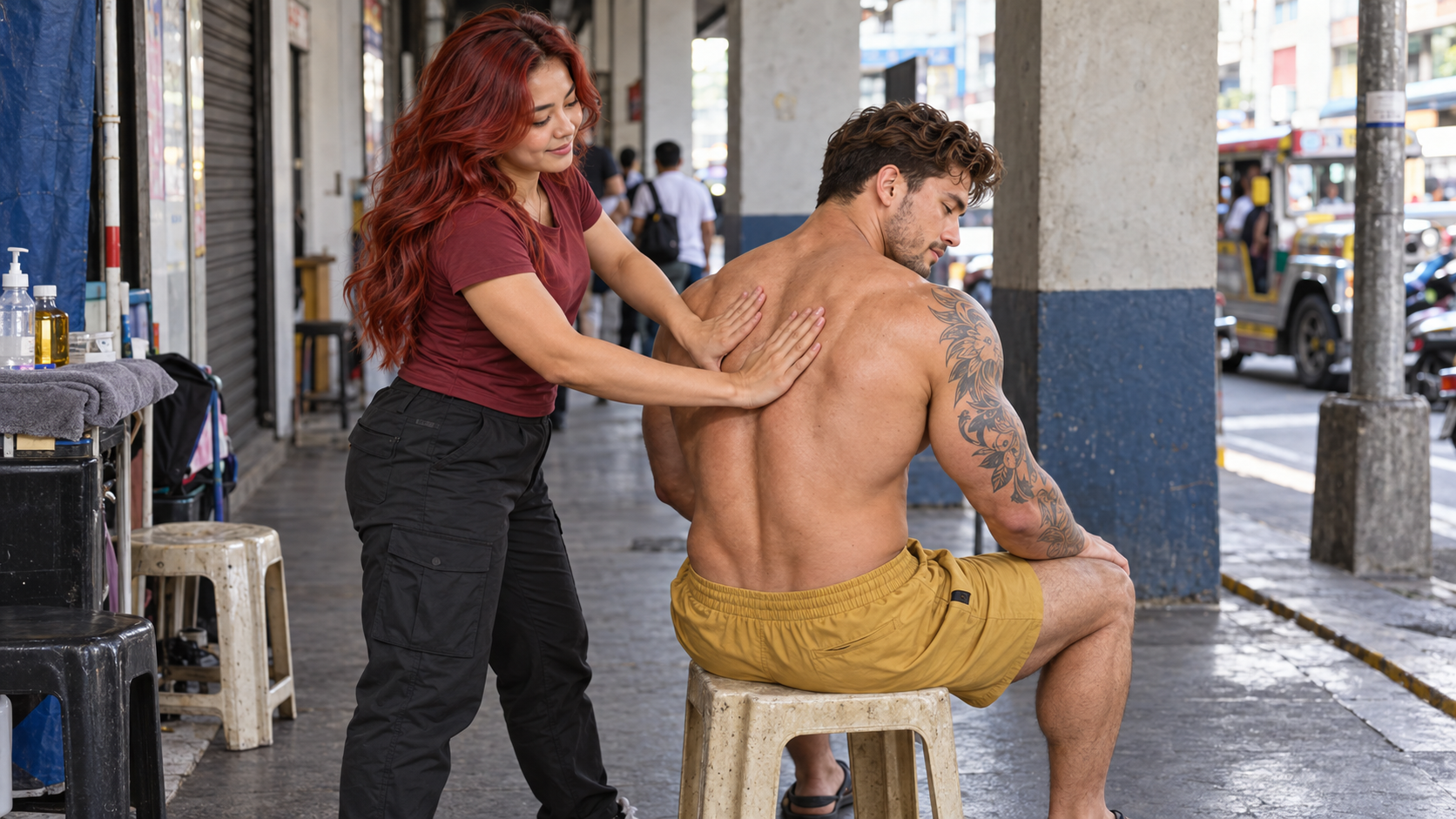
Shopping for massage business equipment is its own flavor of confusing. Supplier catalogs seem to specialize in mixing up must-haves, nice-to-haves, gadgets, décor, mysterious tools, and at least three items that only exist because someone had extra LED strips and a wild imagination.
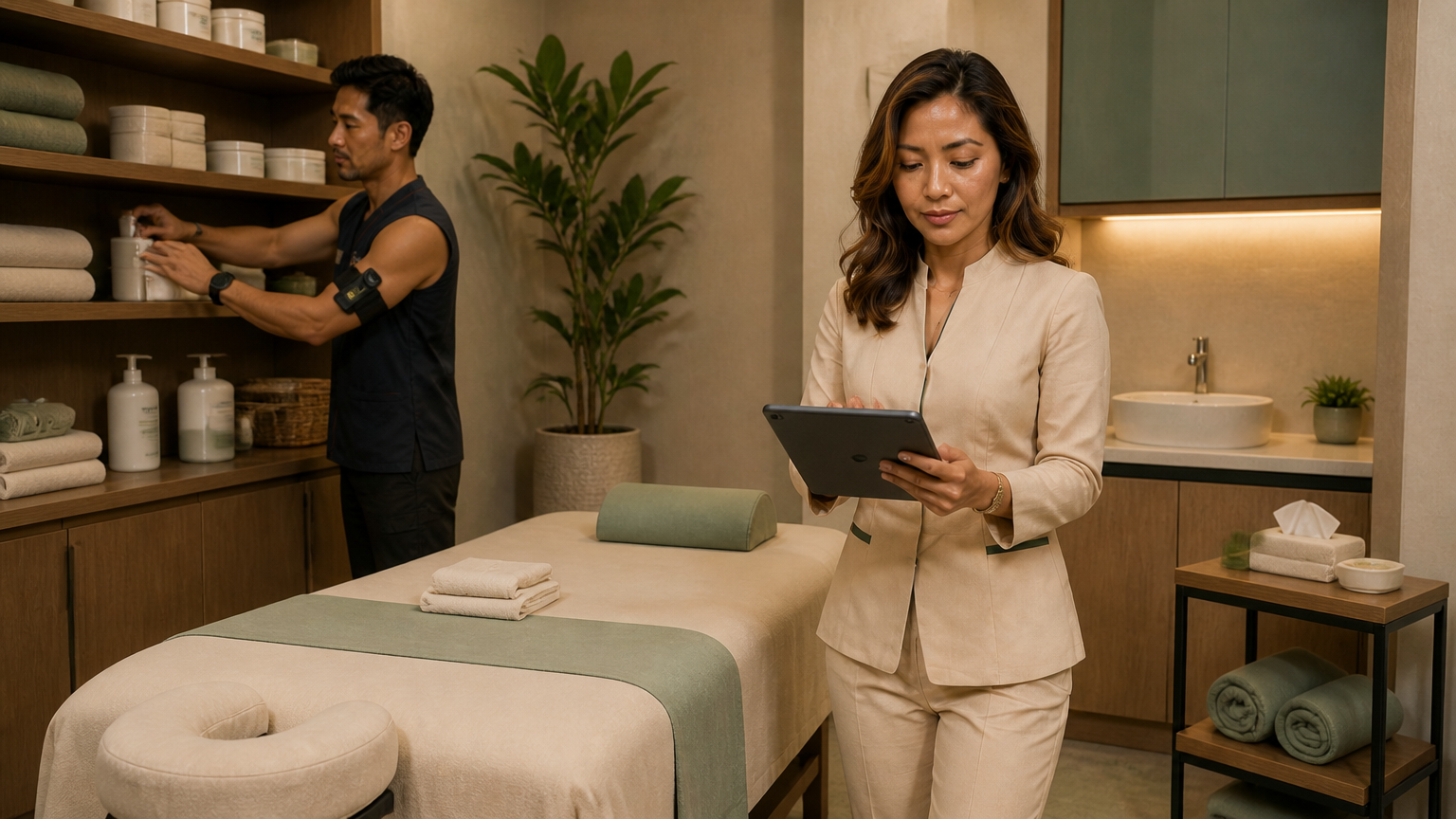
The easiest way to build your equipment list is to stop thinking in product categories and start thinking in workflows. What does the client actually need? What does the therapist need to do their job without creating new yoga poses? What does housekeeping need to keep things clean? What does reception need to keep disorder at bay? And what does the building need so everyone can do their thing safely?
Start with the treatment platform.
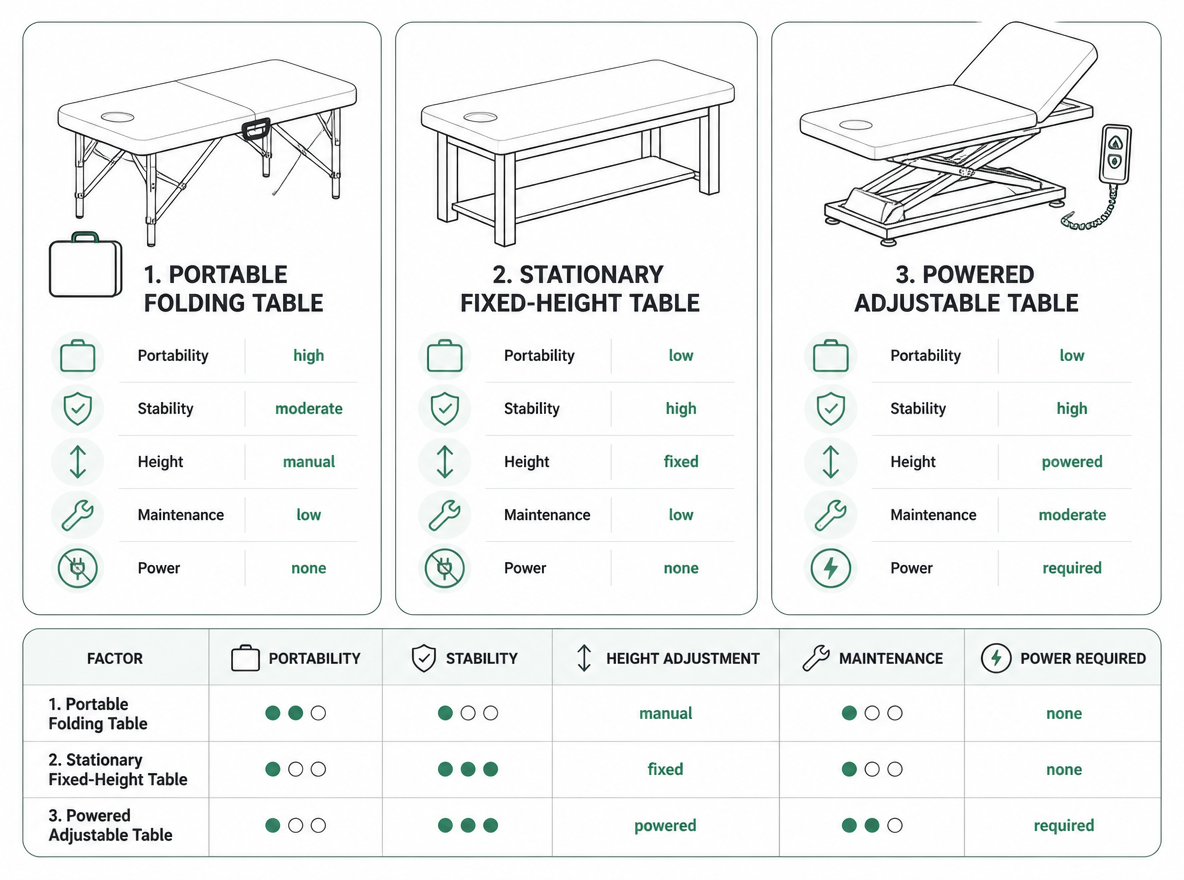
If you’re running a table-based massage business, your main character is the treatment table or bed. Go for commercial-grade equipment that can handle the weight and the number of sessions you expect. Think about working height, width, stability, padding, face-cradle quality, adjustability, therapist access (so nobody has to limbo under the table), cleaning compatibility, replacement parts, warranty support, and whether the table actually fits in the room you have—not just in your dreams.
Portable tables are handy for mobile work or rooms that need to change roles. Stationary tables usually win the stability contest. Hydraulic or electric tables make height adjustment and operation easier, but they also add cost, weight, servicing, and the need for actual electricity (not just wishful thinking).
Try not to judge a table just by how soft it feels when you poke it in the showroom. Your business needs equipment that can survive endless sessions, constant cleaning, being moved around, and years of therapists leaning on it like it’s a trusted sidekick.
Add positioning equipment before fancy modality tools.
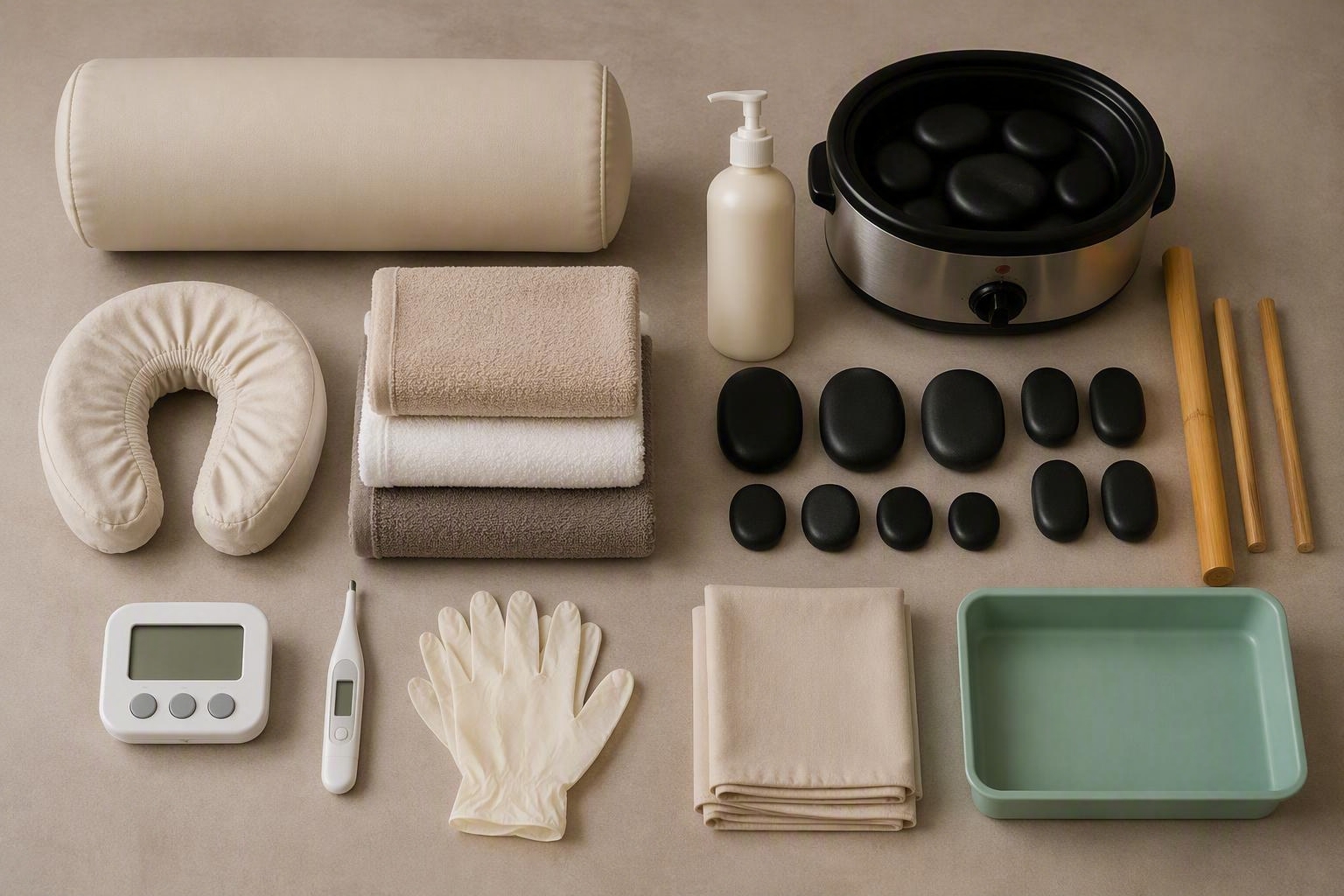
Bolsters, pillows, wedges, face-cradle cushions, arm supports, and positioning pads are small purchases with large operational value. They help accommodate different body sizes, pregnancy positioning where appropriate, side-lying work, mobility limitations, and ordinary comfort preferences.
Buy enough so staff does not have to sneak the only knee bolster out of Room 3 every twenty minutes. If you can, standardize sizes so covers and replacements are less of a puzzle and more of a routine.
Build a linen system, not just a linen pile.
Massage businesses consume linens continuously. Typical needs include fitted or flat table sheets, top sheets, face-cradle covers, towels, blankets, hand towels, robes or wraps if offered, and waterproof or washable protective layers where appropriate.
Figure out your linen par levels based on how many rooms you have, how many sessions happen per day, how often laundry gets done, and a little extra for emergencies. For example: 3 rooms × 6 sessions per day × 2 days between laundry × 3 clean linen pieces per treatment (table sheet, top sheet, face cradle cover) = 108 pieces. Add a buffer for busy days or the inevitable 'oops' moments so staff never run out. If each treatment uses three washable pieces and you expect ten sessions before laundry returns, you don’t need 'a lot of towels.' You need an actual number. Math: not just for accountants anymore.
Also, get separate containers or carts for clean and used linens. The peaceful spa vibe vanishes fast when six bags of laundry start holding meetings in the reception area.
Choose therapist tools based on your actual menu.
Basic massage may require little beyond a table, lubricant, towels, bolsters, and practitioner skill. Specialty services add equipment. Hot-stone work needs stones, a purpose-built heater, handling tools, a thermometer or temperature-control process, and safe storage. Bamboo work needs cleanable rods and storage. Chair massage needs a commercial massage chair. Foot services may need basins, stools, liners where used, and sanitation equipment.
Resist the urge to buy fancy modality equipment before you know who will actually use it, how it will be cleaned, where it will live, and whether your electrical or plumbing setup can handle it. (Impulse buys: fun for five minutes, storage headaches forever.)
Before making a purchase, ask these questions:
Who on the team will use this equipment, and are they properly trained or certified if needed?
How will the equipment be cleaned and sanitized between uses, and does it fit current protocols?
Where will the equipment be stored so it stays accessible but not in the way?
Can the room’s power, water, or drainage safely support the equipment’s requirements?
How often will it actually be used, and does that justify the investment?
What is the plan for ongoing maintenance or service?
Clear answers help you avoid buying equipment that looks amazing in the showroom but becomes a storage problem or a maintenance headache. Bonus: fewer 'what even is this thing?' moments.
Lubricants and dispensers are operational equipment too.
Oil, cream, lotion, gel, or balm choices affect therapist grip, client skin feel, laundry, scent, allergy management, and cleanup. Use professional products appropriate to your services and local requirements.
Choose dispensing systems that reduce contamination and messy cross-contact. Store bulk products away from heat and sunlight (the manufacturer's instructions are not just for decoration). Label anything you decant if your local rules allow it. Keep ingredient info handy so staff can answer allergy questions without guessing or doing interpretive dance.
Cleaning and sanitation equipment belongs on the opening budget.
Plan for handwashing supplies, surface cleaners and disinfectants appropriate to the materials being cleaned, disposable gloves where tasks require them, laundry detergent, covered waste bins, a mop or floor-cleaning system, cleaning cloths, spill supplies, chemical storage, and tools for bathrooms and wet areas.
The specific sanitation standard depends on jurisdiction and service type. Check your local health department, occupational safety agencies, or licensing boards for up-to-date regulations and requirements. National resources like the CDC or OSHA can provide guidance, but always confirm with local authorities to ensure compliance and avoid costly mistakes. The important operational rule is separation: treatment products are not housekeeping chemicals, and clean supplies should not share storage with used laundry or waste.
Laundry can become a hidden capacity limit.
If you do laundry in-house, your washer and dryer are basically production equipment. Check their capacity, cycle time, water and electrical needs, drainage, ventilation, lint traps, noise, heat output, and where you’ll actually fold the clean linens (not just wherever there’s a flat surface).
If you outsource laundry, you still need collection containers, pickup storage, delivery space, backup stock, and a contingency for missed deliveries.
A spa can have four treatment rooms and still feel like a two-room operation if laundry can’t keep up. Laundry: the secret boss level.
Reception needs boring equipment that works every day.
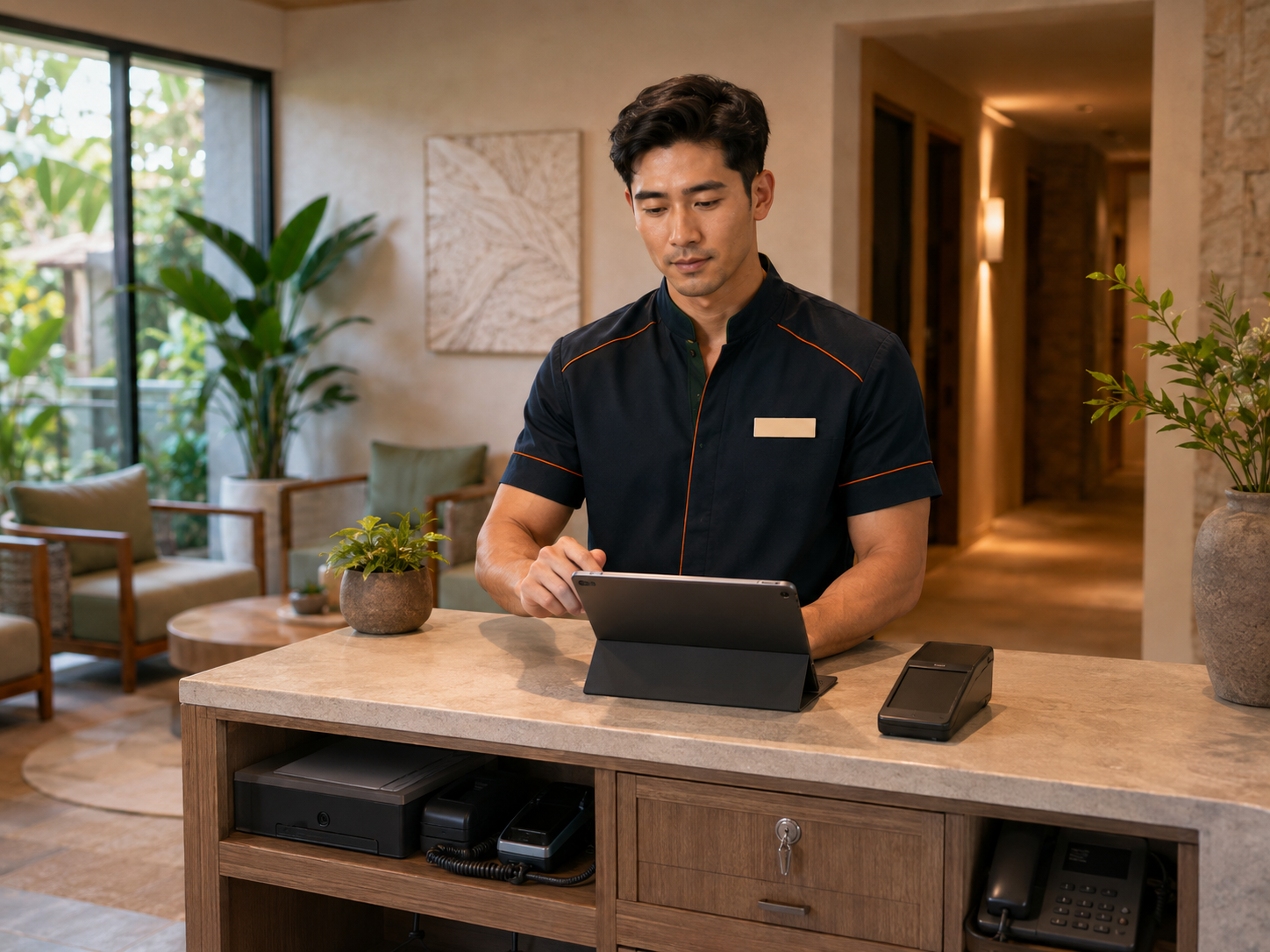
Reception usually needs a reliable computer or tablet, booking software, a payment terminal, a receipt solution where required, a phone, secure cash handling if cash is accepted, a router and network equipment, a printer only if really needed, lockable storage, charging points, and backup procedures when internet or power fails.
Think beyond the software used behind the counter. MassageNexus.com can function as a customer-facing layer in the same technology stack: helping people discover the establishment, giving operators and clients a massage-and-spa resource, creating potential advertising or featured-visibility opportunities, and serving as a booking entry point where that function is enabled. It does not replace the spa’s internal scheduling, payment, or record systems; it extends how new and returning clients can reach them.
Keep client-facing clutter to a minimum. The front desk should not look like the back of a gaming PC after someone rage-quit cable management. lol
Do not forget environment systems.
Heating, cooling, ventilation, lighting, hot-water capacity, electrical outlets, sound control, water pressure, and drainage are part of the equipment system even if they came with the building.
Ventilation deserves particular attention in small enclosed treatment rooms and wet facilities. ASHRAE Standard 62.1 is a recognized U.S.-based framework for minimum ventilation and acceptable indoor air quality in nonresidential buildings; local mechanical and building codes are what determine legal requirements for your site.
Use adjustable lighting where possible. Provide enough task light for cleaning and room turnover even if treatment lighting is deliberately low. Install outlets where therapists need them rather than creating extension-cord habitat around the room.
Safety equipment depends on the facility.
Common needs may include first-aid supplies, fire extinguishers and alarms as required by local code, emergency lighting, clearly maintained exits, anti-slip mats where appropriate, grab bars where required, thermometers for heat-based services, electrical protection near wet areas, and emergency communication.
Wet amenities dramatically increase equipment and maintenance complexity. A commercial hot tub or spa, for example, requires water treatment, testing, circulation, filtration, heating, drainage, safety systems, and trained operation. CDC guidance for hot tubs includes routine disinfectant and pH monitoring and a maximum water temperature of 104°F or 40°C.
Stock spare parts before the first failure
Keep replacement face-cradle cushions, table hardware, charging cables, batteries, bulbs where applicable, dispenser pumps, linen reserve, and other inexpensive failure points on hand. Track manufacturer contacts, warranties, serial numbers, and service schedules.
The cheapest downtime is the downtime you prevent with a ten-dollar spare.
Buy in three tiers
A practical purchasing sequence is:
Tier 1: service-critical. Tables, bolsters, linens, hygiene supplies, cleaning equipment, storage, payment and booking tools, climate control, and safety essentials.
Tier 2: menu-specific. Hot-stone systems, chairs, foot-service equipment, facial machines, wet-area systems, or other modality tools.
Tier 3: comfort and presentation. Décor, upgraded audio, scent systems, premium furniture, display shelving, and aesthetic accessories.
If the budget becomes tight, protect Tier 1. Clients can forgive a plain wall. They are less forgiving when the table wobbles, the towels run out, or the card terminal becomes performance art.
The best equipment list is not the longest one. It is the one that supports every service, every turnover, every safety task, and every staff workflow without creating unnecessary maintenance.