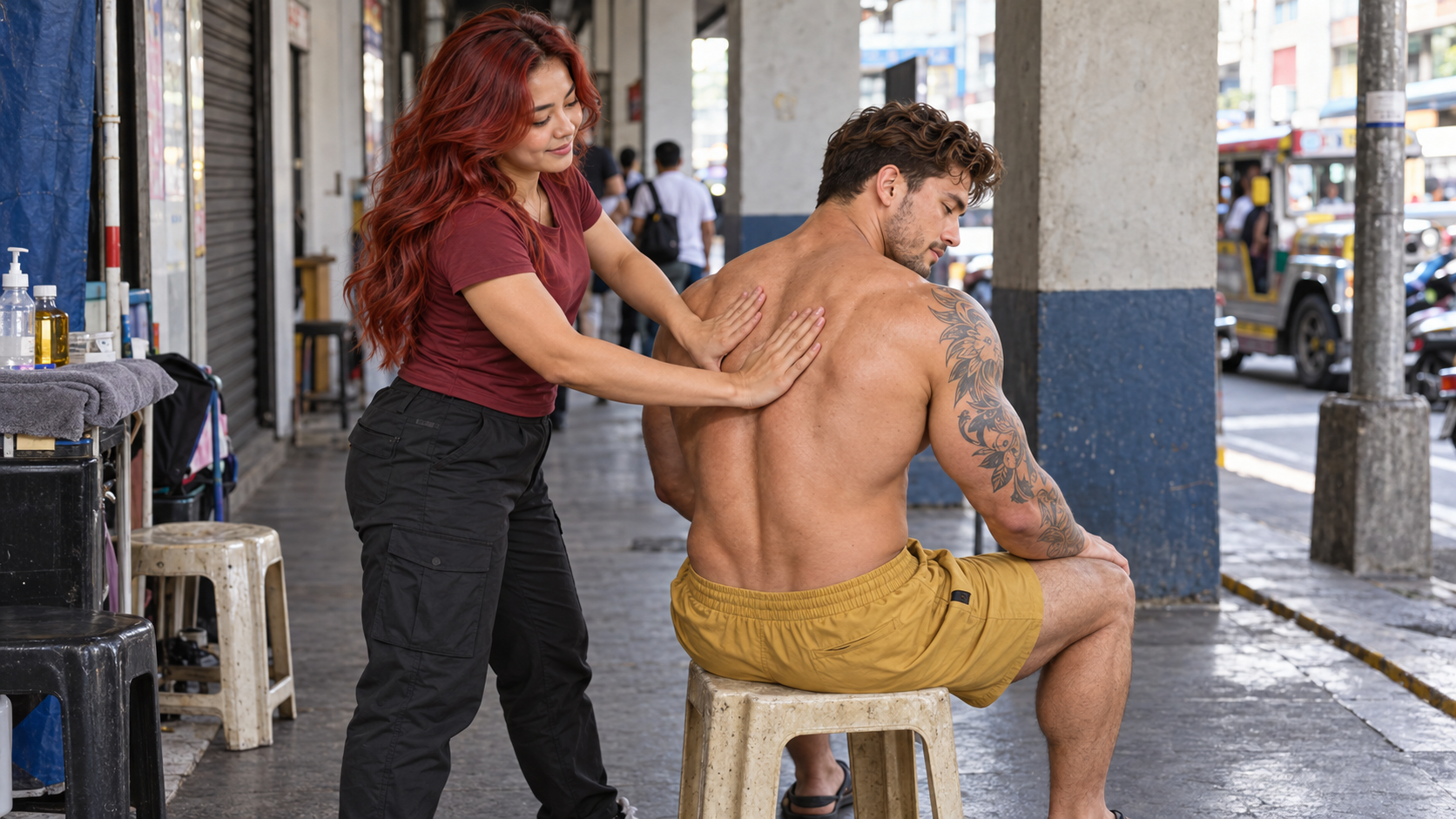

Communication during a massage can become challenging when your language skills are limited to a few basic words or gestures. It is easy to respond confidently, only to realize moments later that you may not have fully understood what was asked.
You do not need conversational fluency to communicate well during a massage abroad. You need a small set of phrases that cover the decisions that actually matter: pressure, pain, areas to avoid, temperature, position, allergies, draping, stopping, and payment. The best phrase list is short enough to retrieve when you are face down and mildly disoriented.
Start with phrases that change the treatment.
Before memorizing “this is very relaxing,” prioritize sentences that protect consent and comfort:
“Please use lighter pressure.”
“A little stronger, please.”
“That pressure is good.”
“Please avoid this area.”
“This area is painful.”
“Please stop.”
“I need to sit up.”
“I feel dizzy.”
These phrases are effective because they are specific. A phrase like “too much” can refer to pressure, temperature, stretching, conversation, or even a scent. “Lighter pressure” gives the therapist a clear and practical instruction.
Use body-region language, not improvised anatomy lectures.
You rarely need the local word for trapezius. You need reliable ways to identify common regions:
neck
shoulders
upper back
lower back
arms and hands
hips
legs
feet
head or scalp
face
Pointing can help, but for sensitive or painful areas, it is best not to rely on gestures alone. If you need the therapist to avoid a recent injury, scar, device, rash, or surgical site, prepare a translated sentence in advance, such as: “Please do not massage here.”
The most important medical phrase may be one you prepare in advance.
If a health condition materially changes massage safety, don't try to explain it from scratch using gestures. Create a short translated note before you travel. Examples include:
“I have an allergy to this ingredient.”
“I am taking blood-thinning medication.”
“I have reduced sensation in this foot.”
“I have a continuous glucose monitor on my arm.”
“I recently had surgery here.”
“I am pregnant.”
Include only information that is relevant to the treatment. The massage therapist does not need your full medical history. If you are unsure whether massage is appropriate, seek medical advice rather than relying on a translation app.
Ask what you are receiving before you change clothes.
Useful pre-treatment phrases include:
“What kind of massage is this?”
“How long is the treatment?”
“Which areas will you massage?”
“Do I keep my clothes on?”
“What should I wear?”
“Is this a private room?”
“May I request a male therapist?”
“May I request a female therapist?”
“How much is the total price?”
“Are there any additional charges?”
These questions are especially helpful when the local service format is different from what you are used to. For example, traditional Thai massage is often performed while you're still clothed. A hamam service may include bathing, exfoliation, and foam washing instead of a standard table massage. Public bathhouses may have their own changing procedures. Clarifying these details in advance helps.
It is also wise to research local customs or etiquette before your appointment, as understanding basic expectations—such as appropriate dress, tipping, or greeting practices—can help you avoid misunderstandings and feel more prepared in unfamiliar settings.
Do not underestimate “I don’t understand”
One of the most useful travel phrases is not massage-specific at all. Japan’s official tourism site, for example, lists wakarimasen for “I don’t understand,” sumimasen for “excuse me,” and arigatou for “thank you.” JNTO also recommends travel-focused translation support such as VoiceTra.
The larger lesson is universal: pretending to understand is rarely polite when the conversation concerns touch, price, health, or consent.
If you do not understand, it is best to say so. You can ask the person to repeat, write down the price, point to the service menu, use a translation app, or ask another staff member for help.
Build a one-screen phrase card before the appointment.
You don't need to prepare a long language document that is hard to use during a session. Instead, keep the most important phrases on a single phone screen. A practical card might include:
My massage preferences
Medium pressure.
Lighter on my neck.
Please avoid my left knee.
No stretching of my neck.
No scented oil.
Please tell me before changing position.
If I say stop, please stop immediately.
Translate that card into the destination language before you arrive. Keep the original English underneath so you know exactly what the translation is supposed to mean. Whenever possible, ask a native speaker or a staff member at your hotel to review your translations before your appointment. This additional step can help ensure your phrases are accurate and clear, giving you extra confidence and helping avoid misunderstandings.
Machine translation can be helpful, but it is best to avoid ambiguous phrases. For example, “harder” may not translate as intended, while “stronger pressure” is clearer. “Don’t touch there” can sound abrupt, but “please avoid this area” communicates the same boundary more neutrally.
Learn the emergency short version.
When something needs to change right away, clarity matters more than lengthy, courteous expressions. Your emergency set can include:
“Stop.”
“Pain.”
“Too hot.”
“Too strong.”
“I feel sick.”
“I need help.”
If the therapist doesn't understand the full sentence, a key word combined with a clear gesture is often enough. In a true medical emergency, it is best to use the local emergency system rather than relying on the spa staff to interpret the situation. Many countries, such as Korea, provide official tourism resources with emergency guidance and multilingual support.
Pressure vocabulary deserves its own mini-set
Travelers often discover that “medium” means different things to different practitioners and massage traditions. Instead of arguing about the label, communicate the result:
“This is comfortable.”
“Please stay at this pressure.”
“Please go lighter here.”
“You can use more pressure on my shoulders.”
“That stretch is too strong.”
This approach also helps avoid assumptions based on cultural stereotypes. Thai massage is not always intense, and Swedish-style massage is not always gentle. The practitioner’s technique is more important than the label on the menu.
Use courtesy, but do not bury the message.
A few local greetings and thanks are worth learning. JNTO explicitly notes that even simple Japanese phrases are appreciated. The same principle applies almost everywhere: making an effort is proper.
A treatment instruction does not need to be a demonstration of language skill. If “please avoid my injured shoulder” is important, communicate it as clearly as possible, even if that means showing your phone.
Save the phrases offline.
Don't assume the treatment room will have reliable Wi-Fi or that your mobile data will work everywhere. Save the translated note as a screenshot or offline document before you leave your hotel. If the destination uses a writing system you cannot read, keep the English version with it so you know what you are showing. Reliable translation apps such as Google Translate, Microsoft Translator, and iTranslate offer offline language packs, rendering them valuable tools for preparing key phrases in advance and accessing them without internet access.
If you are traveling with someone who speaks the local language, it can be helpful to ask them to review the most important health and boundary phrases in advance. A brief check before the appointment is often more effective than discovering during the massage that a translation was unclear.
If you are traveling alone, ask a hotel staff member to check your phrases, or post your translation to an online travel forum for a quick review before your appointment. Many hospitality staff and online communities are willing to help travelers clarify short, important messages.
The goal is not to sound fluent. The goal is to make the treatment understandable.
Before your next massage abroad, consider preparing the ten phrases that would most affect your experience during the session. A small amount of language planning can be more helpful than memorizing less essential vocabulary.