


Massage therapists are trained to analyze posture and movement. That expertise is compromised before work begins if the commute imposes static load and fatigue, whether by car, bus, train, or on foot with equipment.
No commute offers a neutral posture. The back tolerates movement, not restriction. Commuting limits position changes and adds to the total physical load of the workday.
Account for total daily exposure.
Good body mechanics during sessions do not offset strain from related activities. Carrying supplies, loading equipment, sitting in traffic, standing on platforms, climbing stairs with a bag, and repeating the process after work all add to cumulative load.
Commute ergonomics extend beyond posture. The relevant questions are: How long do you remain in one position? Are you reaching for controls? Is your back supported? Is weight carried unevenly? Do you move before transitioning from commute to treatment?
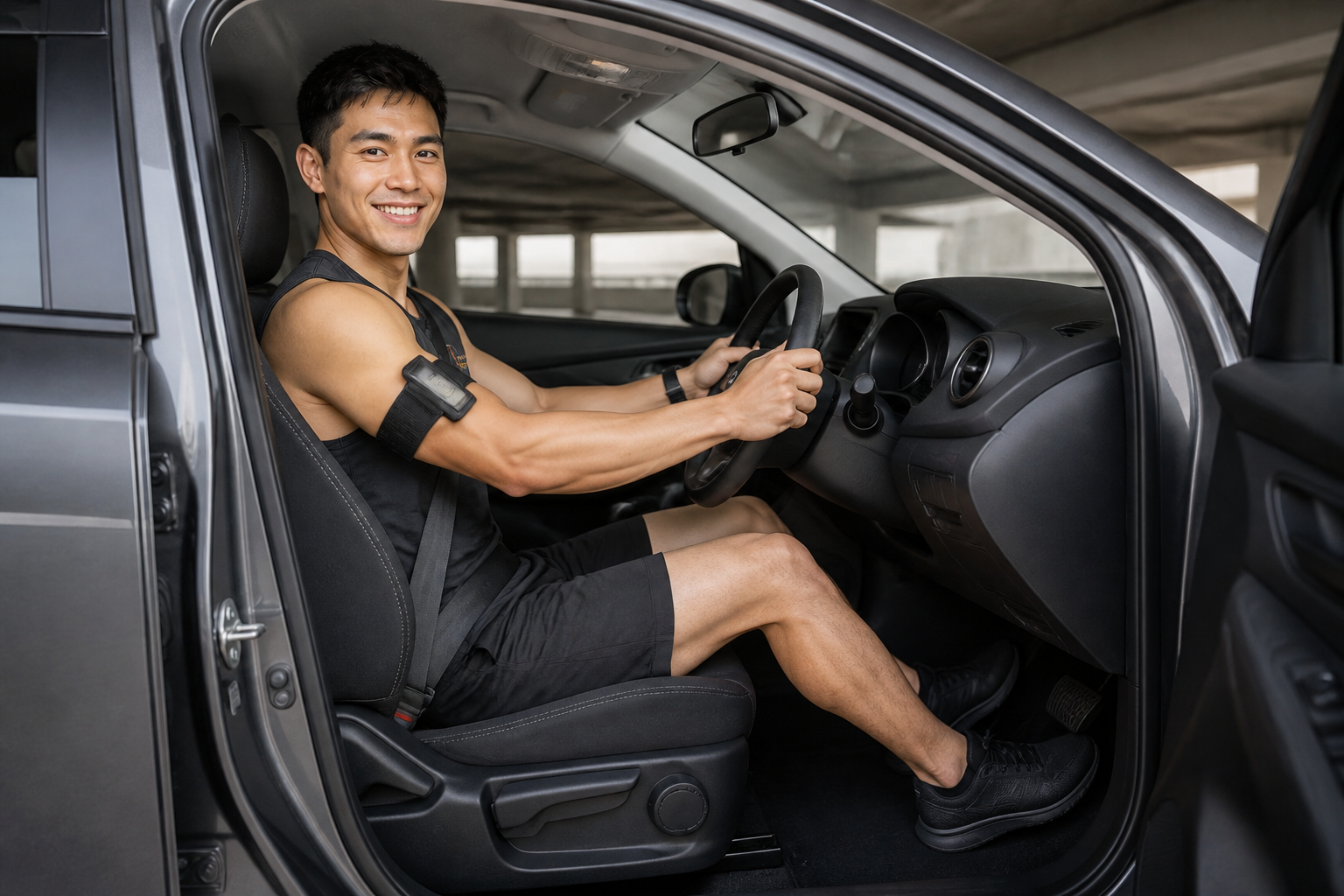
When driving, adjust the seat to fit your body, not your habits.
As the Canadian Center for Occupational Health and Safety points out, driving differs mechanically from sitting at a desk because the legs have to move forward toward the pedals, the arms have to reach the steering wheel, the body is subjected to vibration, and the driver has fewer chances to change position. Poor seat fit and maintaining a prolonged posture can contribute to pain, such as low-back pain.
Before making major changes or investments, use the vehicle's existing settings. Move the seat back enough to operate the pedals without stretching your leg or sliding your pelvis forward. Adjust the backrest to support your back. Adjust the lumbar support until contact is even and does not create a single pressure point. Position the steering wheel within reach so your shoulders remain neutral. If you must choose between reaching the pedals and touching the backrest, the setup is not correct.
Do not treat the commute as uninterrupted sitting time.
No single break interval applies to all routes. The essential point is to interrupt fixed positions whenever possible. CCOHS advises both drivers and passengers to change position and, when possible, get out to stretch or take a break every hour or two. Even shorter intervals are beneficial. Use parking time to walk. During transfers, move rather than immediately seeking another seat. If you arrive early, walk before entering the clinic instead of waiting in the car. Movement does not cure commuting pain, but it alters lumbar posture and reduces the monotony of staying in one position.
Public transit creates a different problem with how people move and sit.
On a bus or train, you generally cannot adjust the seat. Control what you can: foot placement, how you carry equipment, alternating between sitting and standing when possible, and minimizing time spent twisted toward a bag or device. When seated, avoid remaining turned toward a bag; place frequently used items within reach. When standing, maintain a stable stance and use handholds as needed. Do not treat vehicle movement as an opportunity for balance training.

The bag is included in the commute.
Mobile therapists often carry uniforms, oils, linens, tools, or a portable table, adding significant weight before treatment begins. The risk is not only the total weight, but also how it is carried, how often it is lifted, and whether it consistently pulls the trunk to one side.
Reduce unnecessary stock. Use a backpack with two straps instead of a single overloaded strap. Divide heavy supplies among smaller containers. Use wheels for heavy equipment when the route and surface permit. When lifting a portable table from a trunk or storage area, stand close to the load before lifting. If you travel by motorcycle, bicycle, or scooter, secure the equipment so it does not alter your riding position. A load that alters balance or hinders movement is a transport problem, not just an ergonomic inconvenience.
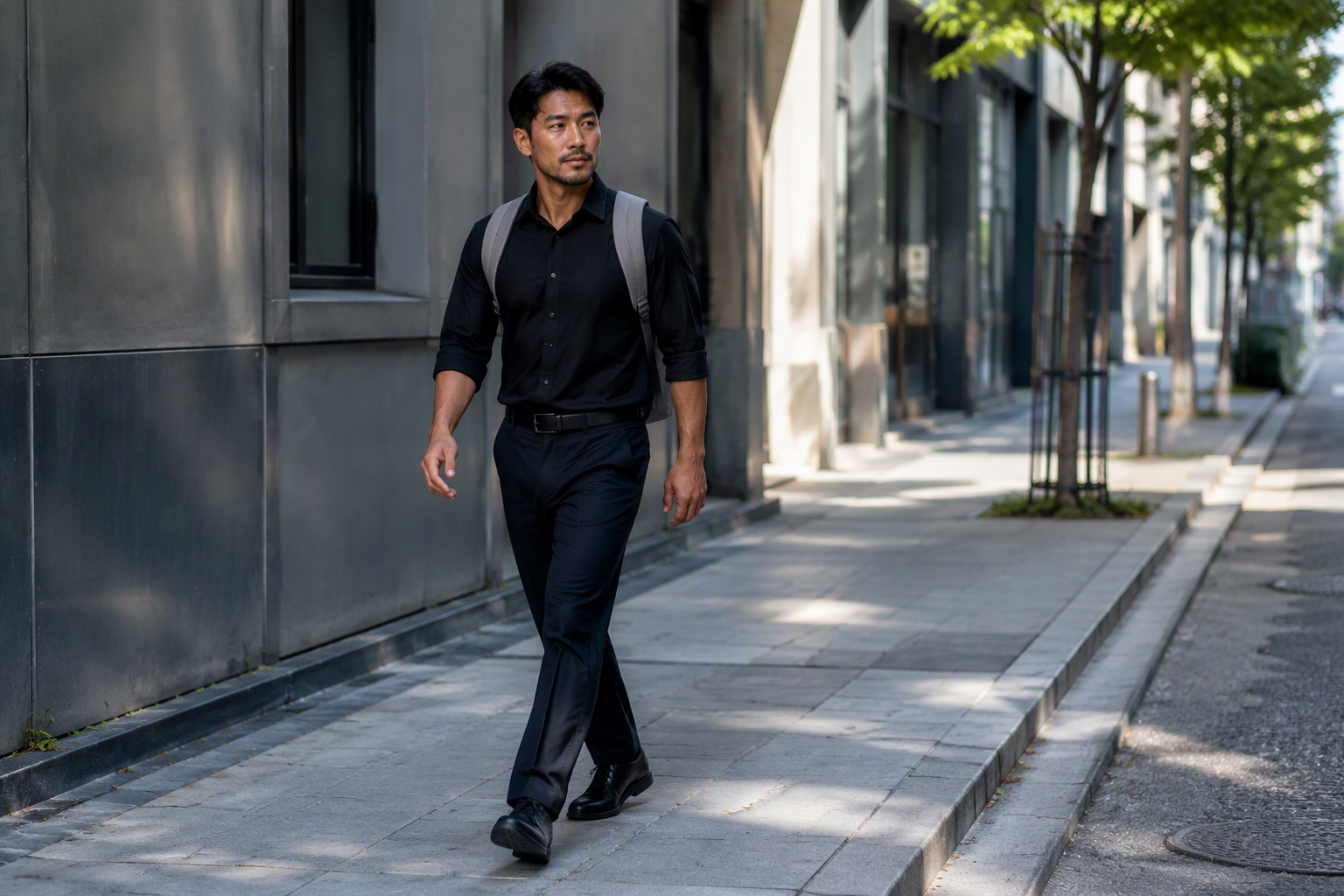
Use the arrival to make the transition.
Do not go directly from your commuting position to your treatment position. Include a brief transition period. Walk for a few minutes, move your hips through a comfortable range, extend and flex your spine, and move your shoulders through several unloaded repetitions. This does not require a formal warm-up.
The goal is not to correct the back before work, but to restore movement variability before starting another repetitive physical task.
Pain should not become the normal price of getting to work.
Take any lower back discomfort that occurs repeatedly during or after the commute seriously. Address the obvious factors: adjust the seat, vary the journey length if possible, consider the load you carry, and use opportunities to move. If symptoms persist, worsen, spread into the leg, involve numbness or weakness, or affect your ability to carry out normal activities, seek clinical evaluation rather than assuming the issue is due to tight muscles.
Discomfort is common among massage therapists, which increases the risk of normalizing musculoskeletal symptoms. These problems are not inevitable. A 2022 Canadian survey found work-related pain prevalent in the hands, wrists, fingers, thumbs, shoulders, lower back, and neck. Commuting is not the sole cause, but it contributes to total exposure.
Build the commute around the workday you actually have
A person with one session in the afternoon will have a different physical experience from someone carrying equipment for three mobile appointments. Those who drive forty minutes each way require a different plan from those who walk ten minutes to a train. The aim is not to establish a single protocol, but to intentionally design the aspects you can control.
Set the seat, reduce the need to reach, break static posture, carry less weight, use both sides of the body, and include movement before the first client arrives and after the last one leaves.
Ergonomics in motion means the lumbar spine does not recognize when the appointment begins. It only experiences the positions, forces, vibration, and recovery opportunities throughout the day. Protecting your back starts before you touch the treatment table and continues after you leave it.